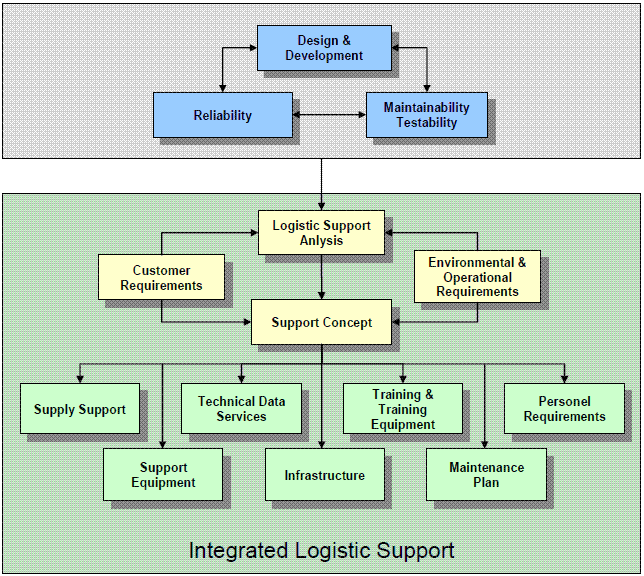
The S3000L specification has established itself as an essential standard for Logistics Support Analysis (LSA) in the aerospace, defense, and complex systems sectors.
With the publication of its latest version—Issue 3.0—the standard reaches a new milestone in terms of clarity, interoperability, and alignment with today’s industrial program challenges.
What is S3000L?
S3000L defines a structured methodology for analyzing, planning, and optimizing the logistics support of a system throughout its entire life cycle: design, production, operation, and withdrawal from service.
Its main objectives are to:
- improve the operational availability of systems;
- reduce overall support costs;
- facilitate the exchange of logistics data between manufacturers, customers, and partners;
- ensure consistency with other specifications in the S-Series family.
Key Enhancements in Issue 3.0
A more robust LSA process
The new version strengthens and clarifies logistics support analysis processes, providing a more consistent framework for project teams and system integrators.
Data model harmonization
Issue 3.0 improves the consistency of the Common Data Model (CDM) and harmonizes the terminology used. This facilitates interoperability with other logistics and documentation standards.
Integration of environmental considerations
Environmental aspects are now better integrated into analyses, addressing growing expectations in terms of sustainability and regulatory compliance.
Improved readability and ease of implementation
Editorial and structural improvements make the standard more accessible, both for LSA experts and new users.
Why adopt S3000L Issue 3.0?
The latest version of S3000L enables organizations to:
- enhance the reliability of logistics analyses from the early phases of programs;
- improve collaboration among all program stakeholders;
- secure digital continuity of support data;
- align projects with international best practices.
As a summary, S3000L Issue 3.0 confirms its role as a strategic pillar of modern logistics support, combining operational performance, cost control, and a long-term vision.